

17 Feb 2026

If your target market already looks overbuilt on paper, why are the most successful operators in the country still breaking ground there? The industry loves to quote square feet per capita as the single magic number for market viability. We have all heard the rule of thumb: if it is under 7 or 8 square feet per person, the market is undersupplied; if it is over 10, stay away.
But here is the reality: relying on per capita data alone causes good deals to get passed over and bad deals to get built. I can tell you that top developers almost never make a go or no-go decision based primarily on that ratio. Square feet per capita is a blunt, static tool. It is blind to the quality of supply, the nuances of local demand, and the actual behavior of customers.
The best developers win because they measure behavior, not just ratios. In this article I am sharing the eight metrics the pros actually prioritize so you can evaluate any site faster and more accurately than 80% of the brokerage community.
Before we move past it, we need to understand why square feet per capita deceives. The formula is simple: total rentable square feet in a trade area divided by the population. The problem is that trade area definitions vary wildly. Furthermore, this metric treats all square footage as equal. It lumps an obsolete, 1980s drive-up facility in the same bucket as a brand new, multi-story, climate controlled Class A facility.
Pro Tip: Instead of asking how much supply exists, ask how much effective supply exists. National averages are now pushing 9.5 square feet per capita, yet top markets still support profitable new builds at 12 or more square feet because the existing supply is functionally obsolete. Use per capita as a yellow flag, never a red or green light.
You need bodies, but specifically, you need growing, high density, and high income bodies. We look for specific metrics within 2, 3, and 4 mile radius.
Target Demographics: We look for a median household income target of greater than $65,000 to $70,000.
Renter Mix: A higher percentage of renters typically correlates to higher storage demand.
Growth Trajectory: Always analyze both 5-year historical growth and 5-year projected growth.
Pro Tip: Density beats raw count every time. Look for "net migration" data. Inbound moving trucks are one of the best leading indicators of future demand. If people are flooding into your zip code, that is a green light that census data hasn't caught yet.
Self storage is an impulse and necessity business. Customers need to see your sign repeatedly before they actually need you.
Traffic Counts: Our target is 20,000+ vehicles per day.
Signage Rights: You must have visibility from both directions.
Commuter Patterns: The "going-home" side of the street is ideal for customer convenience.
Pro Tip: Traffic count alone is not enough. You must perform a line of sight audit. If a driver traveling at 45 MPH cannot identify your building as self storage within three seconds of seeing it, you will likely spend 20% more on digital marketing to fill your units.
The lot dictates your business model before you ever draw a site plan. A broker might quote gross acreage, but the usable land is what matters.
Environmental Constraints: Check for wetlands and 100-year flood limits early.
Zoning & Easements: Understand the lot-coverage requirements and any existing easements that could restrict building.
Topography: A boundary survey or topography report is essential for understanding your true buildable area.
Pro Tip: Always request the civil base map and run a quick "net rentable square feet per acre" test before falling in love with a parcel.
Emotional data is the qualitative "feel" of a market. It is the pulse that data aggregators often miss.
Growth Indicators: Look for new residential rooftops, grocery-anchored retail growth, and major job announcements.
Community Stability: Rising school ratings are often a strong signal of a healthy, growing trade area.
Pro Tip: Drive the trade area like a customer. Count the moving trucks. Check local Facebook Marketplace posts for moving sales and area sentiment. This reveals latent demand in real time.
Pipeline, or "Percent Stock," measures new deliveries as a percentage of existing inventory.
Supply Pressure: A pipeline above 1% to 2% is often a warning sign of oversupply.
Impact: Oversupply can lead to softer occupancy and slower revenue growth.
Market Power: A pipeline below 0.5% signals a tight market where operators can push rental rates.
Pro Tip: Beware of "pipeline ghosts." Many announced projects never break ground. Do not just rely on reports; call the local city planning office to see who actually has permits in hand.
Not all facilities compete equally. You must categorize your competitors into tiers:
Tier 1: Third generation climate controlled, built 2015 or later (Class A).
Tier 2: Second generation with some climate control, built 2000 to 2015 (Class B).
Tier 3: Old drive-up, non-climate, pre-2000 (Class C).
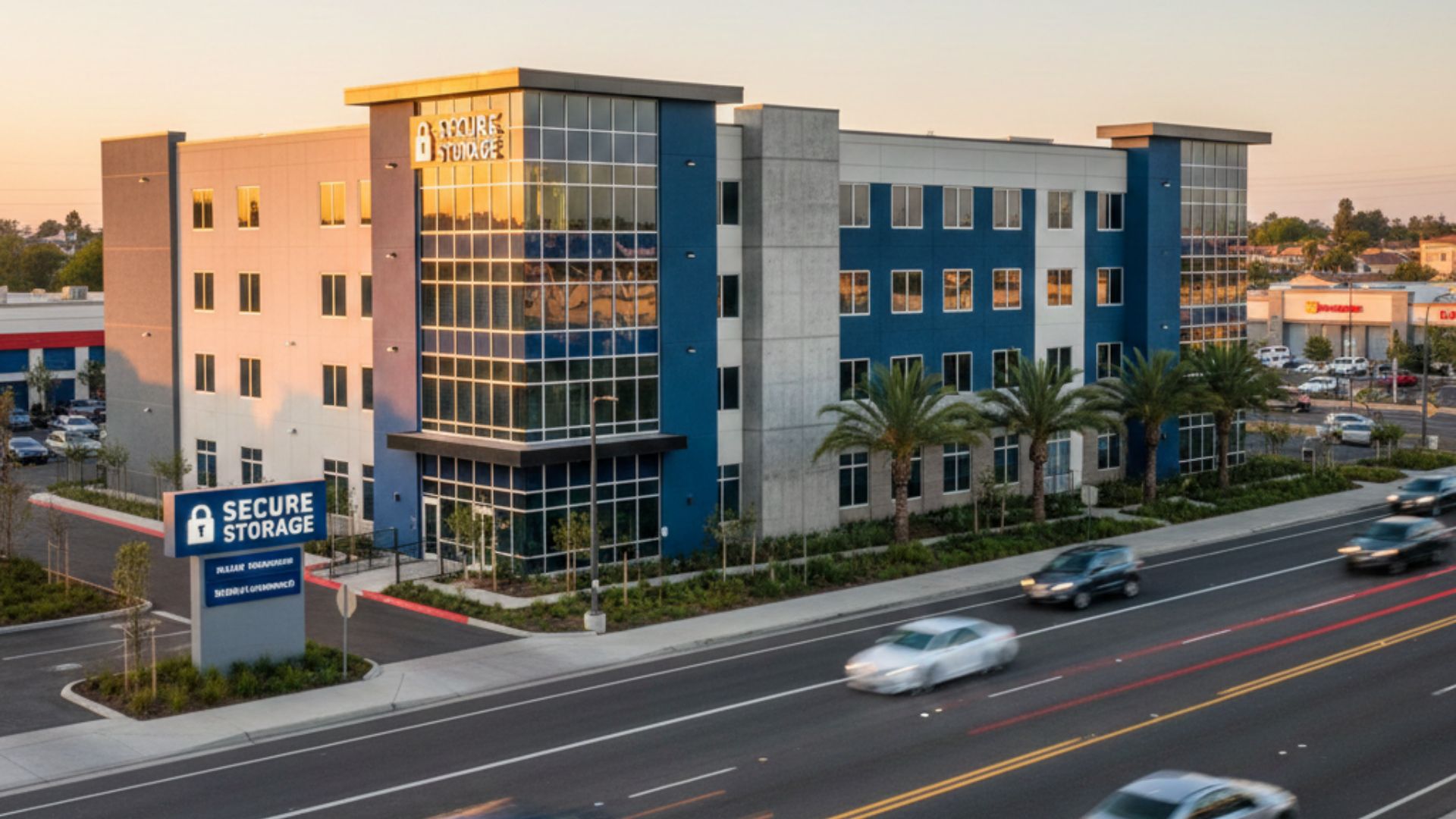
Pro Tip: Only Tier 1 and strong Tier 2 facilities are your true competitors. A 1980s facility that is 95% occupied with low rates is not a threat to a modern, secure, climate controlled facility.
Street rates are the purest reflection of the supply and demand balance.
Pricing Targets: Aim for a rate per square foot of $1.50 to $2.00+ in strong markets.
Product Premium: Climate controlled units should command a significantly higher rate (e.g., $1.81 walk-in vs. $1.42 for regular units).
Leasing Tactics: Be aware of web rates, teaser rates, and "bait and switch" pricing common in the market.
Pro Tip: If local operators have stopped offering deep discounts and are still maintaining high occupancy, the market has unfulfilled demand regardless of the per capita numbers.
The most successful developers in this industry do not chase a single magic ratio. They win by stacking multiple green lights across these eight factors. When you stop letting square feet per capita fool you and start reading the emotional, visual, and behavioral signals of a market, you will find opportunities that everyone else dismissed as "full".
Stop looking at the map and start looking at the movement. That is where the real deals are hidden.
Garrett Byrd is VP of Business Development at Storage Authority LLC, which offers a self-storage franchise model guiding owners through finding land, development and operation. He has more than 20 years of experience in real estate and self-storage management. To reach him, call 941.928.1354 or email garrett@storageauthority.com